Tuesday, 24 September 2013


Friday, 20 September 2013
Great News from ACRI India Placement Division

75% of previous batch students have been placed, with
highest pay package of 4.5 and 4.0 Lakh PA respectively. Moreover the entire
75% candidates are placed in tier 1, MNC companies only. 25% of the students
have been offered more than 4 Interview chances and they are still being
assisted. 55% of the current batch has been placed even before the course
completion.
http://acriindia.com/placement-reviews/student-reviews
http://acriindia.com/placement-reviews/student-reviews
Thursday, 19 September 2013
ACRI INDIA Clinical Research Placement news

http://acriindia.com/placement-reviews/placement-tieups
Tuesday, 17 September 2013
ACRI Workshop in news paper

News paper coverage about ACRI India Clinical Research Institute's workshop on 14th September 2013.
http://acriindia.comSaturday, 14 September 2013
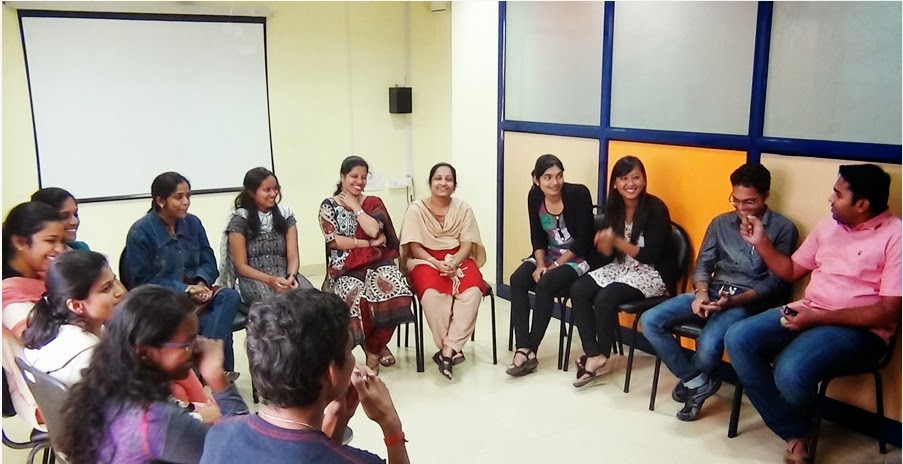
ACRI INDIA Clinical Research Workshop on Advances in Clinical Research and Pharmacovigilance
ACRI
India Clinical Research Institute hosts a day-long workshop to educate medical
professionals and students on recent advances in Clinical Research and Pharmacovigilance

Bangalore, 14th
September 2013: Bangalore-based ACRI India Clinical Research Institute, today conducted a day-long workshop on “Advances in Clinical
Trials and Pharmacovigilance” for medical
professionals and students from allied health science and life science. The
workshop was inaugurated by Ms Anuradha
Ramachandran, Director, ACRI.
The
idea to conduct this workshop was conceived to provide the latest trends seen
in clinical research and Pharmacovigilance. The workshop witnessed overwhelming
participants which in turn reflects the growing interest among doctors and life
science graduates in choosing Clinical Research as new career arena.
The day-long workshop was divided into two sessions chaired by Dr
Smita Singh, Head of Academics, ACRI and Dr Nisha
Nair, an Industry Expert in PV. The first session was mentored by Dr
Singh who took the participants on a tour of clinical research by capturing the
various steps involved in a drug development in a presentation. Participants
were provided with an introduction to Clinical research, followed by drug
discovery procedures, good clinical practices and regulatory requirements for
drug approval.

At
the second session, Dr Nair focused on the current Indian Pharmacovigilance
system, importance of Pharmacovigilance in clinical research and advancement
required to gain World-wide credit. The session also highlighted other fundamentals
of Pharmacovigilance system, such as science of detection, assessment, understanding
and prevention of adverse events, reporting systems for adverse events and
narrative writing.
The
workshop was successfully concluded by furnishing the participants instructive
and informative nuances of clinical research. At the end, certificates were
handed over to the participants confirming them as ‘GCP trained’ which enable
participants to further apply for Clinical Research profiles in CROs ( Contract
Research Organization) with the knowledge acquired during the workshop.
ACRI India Clinical Research:
is modeled on the lines of some of the premier Clinical Research Institutes of
India. We are dedicated and committed to provide excellent Clinical Research
Professionals to the Clinical Research Industries. At ACRI, we offer job
oriented courses viz., “PG Diploma in Clinical Research” “Clinical Data
Management” & “Clinical SAS Programming”
Friday, 14 June 2013
Most preferred online course
MOST PREFERRED ONLINE COURSE
ACRI's online course "PG Diploma in Investigator's Responibilities" is the most preferred course among all the Doctors viz., MBBS, BDS, BAMS, BPT & BHMS.
Wednesday, 5 June 2013
Market Research Estimates the Central Laboratory Market at $1.5 Billion
Today much of the clinical
development of new drugs is outsourced by the pharmaceutical industry. This
outsourcing is managed by hundreds of contract research organizations
world-wide ranging from global industry leaders such as Covance to small two
person niche companies. The proportion of the work outsourced continues to grow
at a healthy double digit rate and today approaches 30% on average. Laboratory
pathology analysis of blood, urine and other patient specimens is on the other
hand, outsourced at a virtually 100% level with few parameters, usually
biomarkers, being analyzed in the pharmaceutical companies' laboratories.

The central laboratory business is by its very nature a
global business now that the pharmaceutical industry has moved to global drug
development. Unlike contract research organizations a small pathology
laboratory cannot compete and the vast majority of the business is concentrated
in the hands of relatively few, perhaps 20, large players.
Choosing a central laboratory and then contracting with it
are vital to the successful outcome of a clinical trial
Selecting Preferred Providers.

While choosing a laboratory to conduct a specific study,
following points should be kept in mind:
- Favorable pricing and better service.
- Quality assurance & Quality control.
- Data Management.
- Single lab for all studies.
- Financial Stabilit.
- A Dedicated tea.
- Technical expertise and experience Support the launch of a test
Defining Expectations
Once a central laboratory has been selected, the success of
the relationship will be largely determined before the first sample is
delivered. It is important to define performance expectations at the outset of
the relationship through mutual planning. Periodic meetings between the sponsor
and laboratory provide opportunities for addressing measurements and discussing
areas for improvement across all ongoing studies.
Here are some examples of expectations that could be set
before the first study begins:
Sponsors should provide all necessary information to their
laboratory four to six weeks in advance, thereby giving the laboratory ample
time to set up the study properly. The first three weeks of the setup process
will largely determine how smoothly it runs. There is no surer way to
compromise a study than to give your central laboratory a week to set it up.
After a study has been set up, it is vitally important that the sponsor make
few if any changes, since they can have a cascading effect on all aspects of
the trial.
Data file setup, including formatting, must be determined,
which typically requires the laboratory to develop and submit a dummy file
showing how data for all patients and all visits will be presented. This often
requires the laboratory to facilitate communication between a sponsor’s clinical
and data management personnel. Data cleanliness is essentially the byproduct of
continuous improvement. The ultimate objective being a clean set of data for
database lock at the end of the study. If a study requires development of new
methods, the sponsor should give the central laboratory sufficient advance
notice. The process is usually time-consuming and cannot be completed in a
month.
Typically laboratories require advance notice for
replenishment; participating physicians cannot realistically expect quality
kits containing all the necessary contents and paperwork to be consistently
delivered in 24 hours.
Following are some of the examples of Central Lab
Covance
Clearstone/MDS
ICON
Lab Corp
Quest
PPD
Quintiles
Subscribe to:
Posts (Atom)